
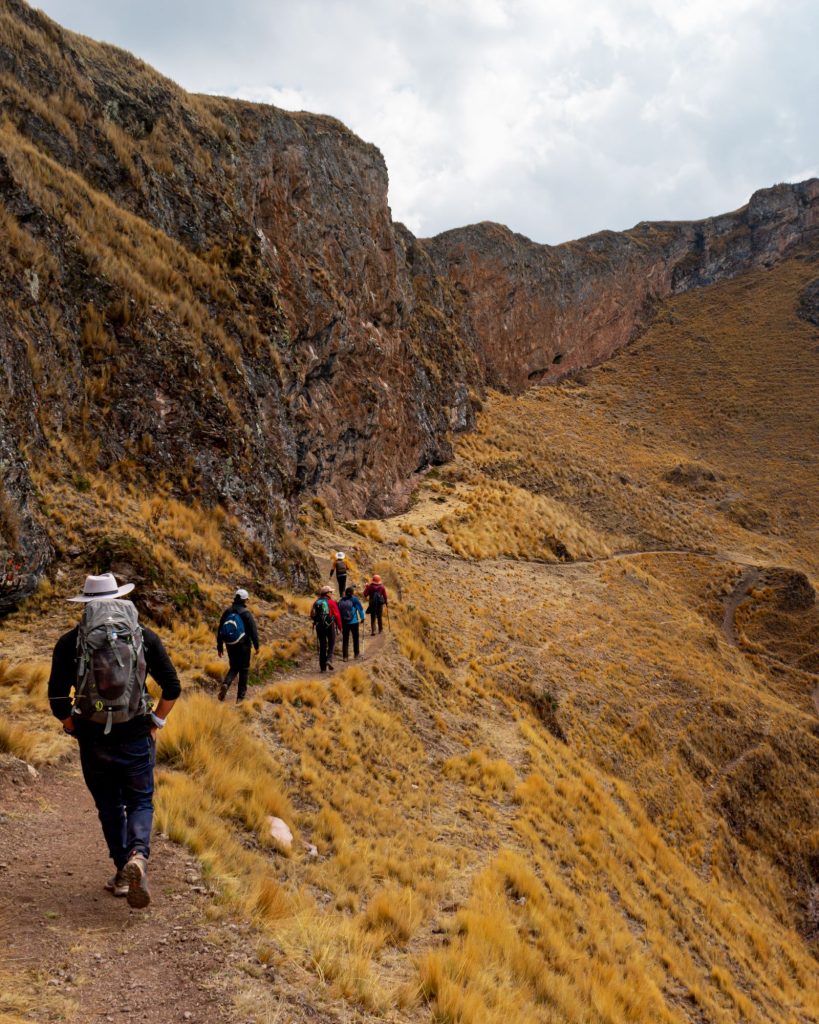
The Inca Trail is the only trek that arrives at Machu Picchu on foot, through the Sun Gate, exactly as travelers have done for decades. It is also the most regulated trek in Peru: permits are strictly limited each day, you can only hike with a licensed operator, and independent trekking is not allowed. This guide explains how permits actually work — including one fact most websites get backwards.
The Permit Reality: Read This First
If you book the classic 4-day Inca Trail, your Machu Picchu citadel entry is included — you do not buy a separate ticket. The 4-day trekking permit covers both Circuit 1 and Circuit 3 access on Day 4, and your trekking agency issues the citadel entrance together with the permit under Ministry of Culture regulation. Buying a separate citadel ticket on TuBoleto on top of a 4-day trek is unnecessary.
Three more things most first-timers don’t know:
- Permits are capped daily. Only a few hundred trekkers per day are allowed on the trail (the daily quota includes guides and porters, so trekker spots are even fewer). When they’re gone, they’re gone — no exceptions, no waitlist.
- Only licensed operators can obtain permits. There is no official website where you buy an Inca Trail permit directly. You book a trek with an authorized agency, and the agency secures your permit against your passport details.
- Your passport must match your permit exactly. Book with the passport you will travel with. A renewed passport with a different number can invalidate your permit.
The Classic 4-Day / 3-Night Trek
This is the full Inca Trail: roughly 43 km (27 miles) from the trailhead at Km 82 to Machu Picchu, over four days and three nights of camping.
- Distance: ~43 km (27 miles)
- Duration: 4 days / 3 nights
- Highest point: Dead Woman’s Pass — 4,215 m (13,828 ft), Day 2
- Difficulty: Moderate to challenging
- Nights: 3, camping on the trail
- Day 4: Sunrise arrival at the Sun Gate, then guided citadel visit
- Book ahead: 3–6 months; 5–6 months for peak season
Day 2 is the crux: the long climb to Dead Woman’s Pass at 4,215 meters is the highest and hardest section of the trek. Days 3 and 4 ease off, passing the ruins of Runkurakay, Sayacmarca, Phuyupatamarca, and Wiñay Wayna before the final pre-dawn walk to the Sun Gate (Inti Punku) on Day 4 — the moment the whole trek is built around.
Reputable operators bundle permits, a certified guide, porters, camping equipment, all meals on the trail, and the return train from Aguas Calientes. Confirm all of this is included before you book; the cheapest quote is rarely the complete one.
The Short Inca Trail: 2 Days / 1 Night
Short on time or not ready for four days at altitude? The short trek starts at Km 104 and covers about 12 km (7.5 miles) over two days:
- Distance: ~12 km (7.5 miles)
- Duration: 2 days / 1 night
- Highest point: ~2,700 m (8,860 ft)
- Difficulty: Moderate
- Nights: 1, hotel in Aguas Calientes (no camping)
- Day 1: Afternoon arrival at Machu Picchu via the Sun Gate
- Day 2: Full guided tour of the citadel
- Book ahead: 1–2 months
You still walk the original Inca stone path, still visit Wiñay Wayna, and still enter through the Sun Gate — just without the high passes and the camping. It sells out far less aggressively than the classic trek, making it the realistic option if you’re booking inside three months.
4-Day vs 2-Day: Which Should You Choose?
- Choose the 4-day if you have the time, the fitness, and the lead time to book 5–6 months out. It is the complete experience: high passes, cloud forest, a dozen archaeological sites, and the full sunrise arrival.
- Choose the 2-day if you’re short on time, traveling with family or older hikers, or booking late. You skip the hardest altitude and the camping, and you still get the Sun Gate arrival and a full citadel tour.
Either way, you need a permit, and either way the permit comes through a licensed operator — never direct, never from a marketplace.
When to Book
- Classic 4-day, May–October (dry/peak season): 5–6 months ahead. The most popular months sell out first.
- Classic 4-day, shoulder season: 3–4 months ahead.
- Short 2-day: 1–2 months ahead is usually enough.
Book with the exact passport you’ll carry. If your passport is expiring and you’ll renew before the trek, ask your operator how they handle the document update — policies vary, and a mismatch at the Km 82 checkpoint ends the trek before it starts.
Altitude and Preparation
The classic trek’s highest point (4,215 m) is higher than anything most travelers have hiked. Prepare accordingly:
- Acclimatize in Cusco for 2–3 days before the trek starts. Cusco itself sits at about 3,400 m — use easy days there (a city walk, the Sacred Valley) to adjust.
- Day 2 is the test. Train with hill walks or stair climbing in the months before; cardio fitness matters more than leg strength.
- Hydrate constantly, go slow, and listen to your guide. Coca tea is offered everywhere and is part of the local routine.
- Pack for all weather. Temperatures swing from below freezing at high camps to warm afternoons in the cloud forest. Layers, rain gear, sun protection, and broken-in boots are non-negotiable.
Choosing an Operator (Without Getting Burned)
Because permits only flow through licensed agencies, your operator choice is your permit strategy. Look for: an explicitly licensed operator (ask for their authorization), small group sizes, clear inclusion lists (permits, guide, porters, food, camping gear, train), and transparent porter-welfare practices. Be skeptical of prices far below the market — the permit, staff, and logistics have real fixed costs.
And remember the hard rule: no one can sell you a standalone Inca Trail “permit.” Anyone offering to sell you just the permit, separate from a trek, is not legitimate. Permits are issued to operators against named trekkers.
Frequently Asked Questions
DO I NEED A SEPARATE MACHU PICCHU TICKET IF I HIKE THE 4-DAY INCA TRAIL?
No. The 4-day permit includes citadel circuit access on Day 4, arranged through your trekking agency. Do not buy a separate TuBoleto ticket.
CAN I HIKE THE INCA TRAIL INDEPENDENTLY?
No. Independent hiking is not permitted — you must go with a licensed operator, and your permit is tied to that operator.
WHAT HAPPENS IF PERMITS ARE SOLD OUT FOR MY DATES?
Consider the short 2-day trek (separate, larger permit pool in practice), shift your dates, or visit the citadel by train instead and save the trek for another trip. Don’t trust anyone promising “last-minute permits” outside the official system.
WHICH CITADEL CIRCUIT DO TREKKERS GET ON DAY 4?
The 4-day permit includes Circuit 1 and Circuit 3 access on the final day, with the citadel entrance issued together with the trek permit through your agency. Your guided citadel tour typically follows the classic route.
WHEN IS THE BEST TIME TO HIKE?
May through October is the dry season and the most reliable weather window. The rainy season (roughly November–April) means muddier trails and clouded views — and check with your operator about any seasonal maintenance closures before booking.
HOW FIT DO I NEED TO BE?
For the 4-day: genuinely fit — comfortable hiking 6–8 hours with significant elevation gain, at altitude, for consecutive days. For the 2-day: moderate fitness is enough for most travelers.
Related guides
- Buying citadel tickets separately? Follow our TuBoleto step-by-step booking walkthrough — the only official place to buy them.
- Not sure which circuit to pick? See Machu Picchu tickets 2026: circuits, routes & prices.
- Filling the days around your trek? Browse our best day tours from Cusco — Sacred Valley is ideal acclimatization before the trail.