
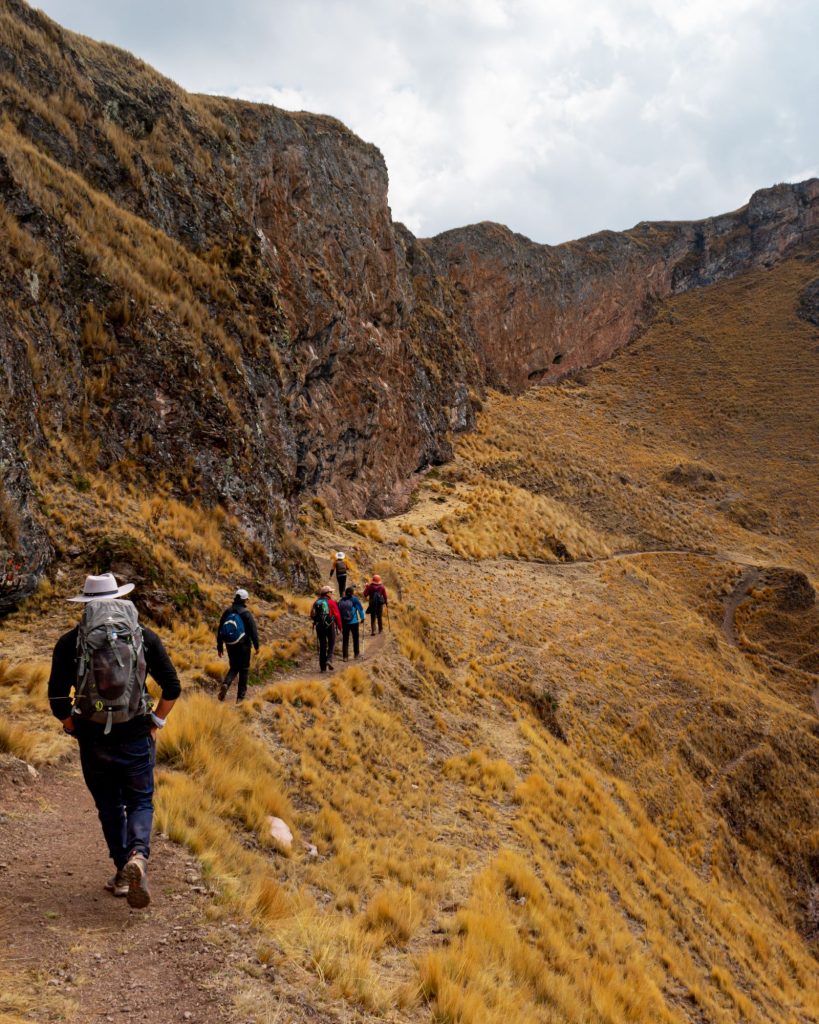
Altitude is the one thing about a Machu Picchu trip that catches people by surprise. Cusco sits at 3,400m — high enough that most visitors feel it — while the citadel itself sits lower, at 2,430m. Understand the numbers, give your body time to adjust, and pack for mountain weather that swings from cold mornings to fierce midday sun, and the altitude becomes a footnote instead of the story of your trip. This guide covers both: the altitude and exactly what to pack.
The altitudes that matter
The key insight: your trip moves through very different elevations, and the citadel is not the highest point you’ll sleep at. Here are the numbers that matter:
- Cusco: 3,400m — where you’ll likely arrive, and where altitude hits hardest
- Sacred Valley (Ollantaytambo / Urubamba): ~2,800m — a gentler acclimatisation step
- Aguas Calientes: 2,040m — noticeably easy breathing
- Machu Picchu citadel: 2,430m
- Huayna Picchu: 2,720m
- Sun Gate: ~2,720m
- Inca Trail’s Dead Woman’s Pass: 4,215m — only relevant if you’re trekking (see our Inca Trail permits guide)
Note the counterintuitive bit: the citadel sits nearly a kilometre lower than Cusco. Most people feel better at the ruins, not worse. The place to respect is Cusco — plan your first days accordingly, and read our where-to-stay guide for the acclimatisation strategy.
How to acclimatize
Spend at least two full days at altitude before the citadel, ideally in Cusco or the Sacred Valley. “At altitude” means sleeping at altitude — day trips up and down don’t acclimatise you the same way.
Take it easy on day one: no strenuous hikes, no sprinting up stairs. Drink plenty of water — mountain air is dry and dehydration sneaks up on you. Eat light. And go easy on alcohol for the first days; it hits harder at altitude and works against acclimatisation.
Sleep lower when you can: nights in the Sacred Valley (~2,800m) or Aguas Calientes (2,040m) are easier on the body than nights in Cusco. This is one reason the split-stay approach in our where-to-stay guide works so well — you acclimatise gradually instead of spending every night at 3,400m.
Altitude sickness: symptoms and what to do
Mild symptoms are common, especially in Cusco, and usually pass in a day or two: headache, nausea, shortness of breath on stairs, restless sleep, and general fatigue. Don’t panic — but don’t ignore how you feel, either.
What helps: rest, water, light food, and giving it time. Most travellers turn a corner by day two or three. What doesn’t help: pushing on with a strenuous plan while feeling rough, or trying to power through on very little sleep.
If symptoms are severe or worsening — confusion, inability to walk straight, breathlessness at rest — descend to lower altitude and seek medical help. Do not push on. Serious altitude illness is rare on a standard Machu Picchu itinerary, but this is the one rule that matters: the mountain will still be there tomorrow.
Coca tea and soroche pills
Coca tea (mate de coca) is offered everywhere in Cusco — hotels, restaurants, tour offices. It’s a traditional remedy many travellers find soothing, and a warm cup on arrival is a genuine comfort after a long journey. But be clear-eyed about what it is: a mild herbal tea, not a medical treatment.
Some travellers consult their doctor about acetazolamide (soroche pills) before the trip. That is a conversation for a doctor, not this guide — we can’t advise on medication. If you go this route, sort it out well before you fly, not in a Cusco pharmacy the night before you need it.
Packing list for the citadel
You’re packing for a day that starts cold, gets hot, and might rain — at altitude, where the sun is fierce and the weather turns fast. Everything on this list fits in a small daypack:
- Small daypack — large backpacks aren’t allowed inside (see below)
- Passport — required for entry, and it must match the name on your ticket
- Water and snacks — there are no shops inside the citadel
- Rain jacket or poncho — even in the dry season; see our best-time-to-visit guide for what each month brings
- Warm layer — a fleece or equivalent; mornings are cold, especially June through August
- Sun hat, sunglasses, sunscreen — UV is strong at altitude and there’s little shade among the ruins
- Insect repellent — the citadel sits in cloud forest, and biting insects are part of the deal
- Cash in Peruvian soles — for bus tickets, lockers, snacks, and small purchases in Aguas Calientes
- Comfortable broken-in walking shoes with good grip — stone steps are uneven and can be slippery, especially after rain
For the rest of the trip, the same principles apply: layers, rain protection, and sun protection. Cusco evenings are cold year-round while midday can be warm — you’ll dress for both in a single day. If you’re visiting in the rainy season (November to March), add a dry bag for electronics and quick-dry fabrics; if you’re visiting June to August, add your warmest layer for those near-freezing early-morning starts.
What’s not allowed inside
Large backpacks are not allowed in the citadel — travel light for the day and leave the big bag at your hotel in Aguas Calientes or Cusco. Storage lockers are available near the entrance for anything you can’t leave behind.
The broader principle: bring only what you need for a few hours of walking. Water, a rain layer, sun protection, snacks, and your passport cover it. Everything else is weight you’ll carry up and down stone steps for no reason.
Get the altitude right and the packing right, and the citadel takes care of the rest. Pair this guide with our best-time-to-visit guide for seasonal packing tweaks, how to get there for travel-day logistics, and where to stay for the full acclimatisation plan.
Frequently asked questions
Will I get altitude sickness?
Not necessarily — most people feel mild effects like a headache or shortness of breath on stairs for a day or two in Cusco. Spending 2 days acclimatizing, drinking water, and going easy on alcohol prevents most problems.
How many days do I need to acclimatize?
Plan at least 2 full days at altitude before the citadel — ideally in Cusco or the Sacred Valley. The ruins themselves (2,430m) are lower than Cusco (3,400m), so most people feel better there, not worse.
Can I bring a large backpack into Machu Picchu?
No — large backpacks are not allowed inside; storage lockers are available near the entrance. Bring a small daypack with water, a rain layer, sun protection, snacks, and your passport.
Do I need hiking boots?
For the citadel circuits, comfortable broken-in walking shoes with good grip are enough. You will want real hiking boots only if you are doing the Inca Trail or climbing Huayna Picchu.
Does coca tea help with altitude?
Coca tea (mate de coca) is offered everywhere in Cusco and is a traditional remedy many travelers find soothing. It is a mild herbal tea, not a medical treatment — if you feel seriously ill, descend and seek medical help.